EojpsNF2zNc
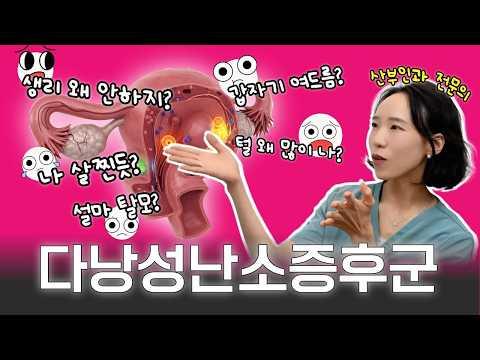
Polycystic Ovary Syndrome (PCOS) is one of the conditions that requires the longest explanation in the consultation room. Just hearing the name makes it difficult to guess what it means, and searching online often brings up information about difficulty conceiving first, leading to immediate worry. In this article, we will explain exactly what this condition is, why gynecology and endocrinology are intertwined, and how we approach it, in order.
The Name Itself Can Be Misleading
'Polycystic' (다낭성) in Chinese characters means many follicles. It does not mean there are multiple diseases.
'Syndrome' (증후군) refers to a state where several symptoms appear together. Therefore, Polycystic Ovary Syndrome is not so much a single disease name as it is a name that groups together the situation within the ovaries and the various changes that follow as a result.
Many people feel as if they have contracted a serious illness the moment they receive this diagnosis because the name sounds heavy. Please feel free to let go of that burden first.
Ovulation is a Monthly Selection Process
Inside the ovary, there are many small follicles. Among them, one representative candidate steps forward once a month.
That representative follicle grows and ruptures, which is ovulation. After some time, menstruation begins.
It's easy to understand ovulation as a regular monthly event.
In Polycystic Ovary Syndrome, this process does not occur smoothly. There are too many follicles competing to become the representative, and sometimes the process stops midway. It's more like a state where, because there are many small follicles, none can take the lead.
The Changes That Follow
If ovulation is not smooth, its effects can appear in various places.
| Possible Changes | Background |
|---|---|
| Delayed or skipped periods | Irregular ovulation |
| Difficulty when trying to conceive | Difficulty pinpointing ovulation |
| Increased body hair (hirsutism) | Changes in hormone balance |
| Hair loss | Same hormonal factors |
| Acne | Same hormonal factors |
| Weight Gain | Endocrine factors also at play |
It is important to note that not all of these symptoms appear, and sometimes none may appear. The combination of symptoms varies from person to person.
Having acne or increased body hair does not immediately lead to this diagnosis either.
Why Gynecology and Endocrinology Are Intertwined
This is why this condition is not solely handled by gynecology.
Ovulation is not something the ovary does alone; it is a process created by the pituitary gland, the ovaries, and various hormones, including insulin, working together. Therefore, if ovulation is disrupted, it may not only be a reproductive issue but can also lead to metabolic changes.
This is why blood sugar and lipid tests may be conducted along with a visit for irregular menstruation. It's not because the condition is severe due to many tests, but because focusing on only one aspect might lead to missing something.
It Is Not a Condition That Prevents Pregnancy
Let me clarify the most common concern.
Polycystic Ovary Syndrome is not a condition that makes pregnancy impossible. It is more like a state where ovulation occurs irregularly, making it difficult to pinpoint the timing.
If the problem is disrupted ovulation, the approach will be to regulate that process. The direction also changes depending on whether there are current pregnancy plans or not.
- If there are no immediate pregnancy plans: Focus on maintaining a regular menstrual cycle and managing metabolic indicators.
- If preparing for pregnancy: Focus on assisting ovulation and confirming its timing.
Even with the same diagnosis, the actions taken will differ according to current goals.
Your Current State Is More Important Than the Diagnosis Name
It's easy to get caught up in the name once you receive a diagnosis. However, what actually needs to be checked is not the diagnosis name, but which aspect of your body is currently out of balance.
The approach varies depending on your menstrual cycle, any Weight Gain, and your blood sugar and hormone indicators. This is also why treatment might appear different for people with the same diagnosis.
Rather than drawing conclusions from online searches alone, please confirm your current state and set a direction according to your goals.
Start with Wooahan Women's Clinic
Continue any questions the video didn't cover through a consultation. We care for your health and confidence.